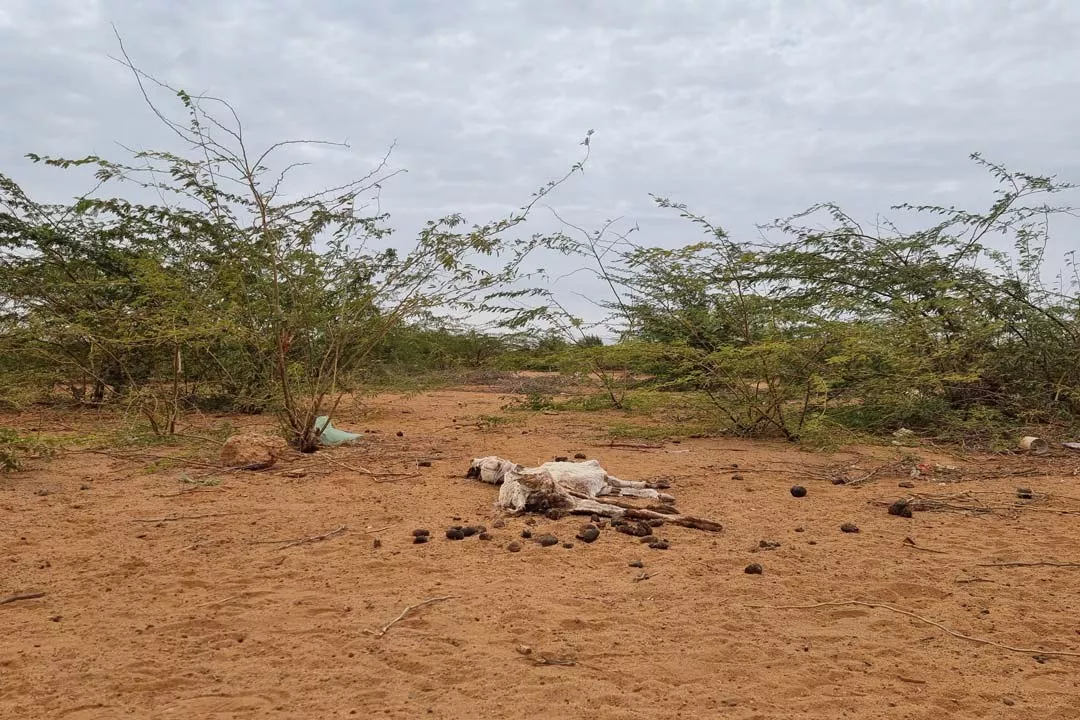
In recent years, Somalia has seen the devastating nexus of climate change, collapsing livelihoods and mass human movement. Repeated droughts, erratic rainfall and escalating water stress are not just environmental issues they are central to the country’s humanitarian crisis, driving food insecurity and displacement while stretching humanitarian systems to the limit.
Scope of the Humanitarian Challenge
According to the latest data from the World Food Programme (WFP), about 4.6 million people in Somalia are facing acute food insecurity (IPC Phase 3 or worse). Approximately 1.8 million children under age 5 are suffering from acute malnutrition. An earlier IPC analysis estimated that, between January and March 2025, around 3.4 million people (17 % of the population) were already in Crisis (IPC 3+) levels of acute food insecurity.
Forecasts for April–June 2025 projected up to 4.4 million people (23 % of the population) could face such levels, driven by below‑average rains, high food prices and conflict.
In terms of displacement, as of mid‑2025 the population dashboard reported that nearly 4 million people had been uprooted within Somalia a combination of drought, floods, conflict and other shocks.
Regions and Livelihoods at Highest Risk
Livelihood systems across Somalia are highly climate‑sensitive. Two broad systems dominate: pastoralism (livestock herding) and agro‑/agropastoral farming. Climate shocks especially rainfall deficits hit these systems hard.
Among the regions particularly affected are Puntland (north‑east), Somaliland (north‑west) and the south‑central region of Jubaland (including Lower Juba and Gedo). In northern and central pastoral zones, the failure of the “Gu” rains (April–June) and poor “Deyr” rains (Oct–Dec) have eroded pastures, increased livestock deaths and triggered livestock migrations.
In riverine and agropastoral zones of the south (Shabelle and Juba basins), reduced river levels, delayed plantings and erratic rainfall have cut crop yields and undermined farm labour incomes. For instance, off‑season harvests in some southern zones dropped to only ~40 % of their five‑year average.
How Climate Shocks Cascade Into Crisis
The chain reaction from climate to humanitarian distress can be summarised as follows:
- Environmental Shock: Below‑average rainfall, long dry spells, high temperatures, and depleted water/pasture resources strain both pastoral and farming communities. Documentation shows that in the 2024 Deyr season rainfall was significantly below normal, exacerbating moisture stress for crops and pasture.
- Livelihood Disruption: For pastoralists, livestock condition deteriorates, mortality rises, herd sizes shrink, and milk production drops. For farmers, planting is delayed, yields plummet, incomes reduce, and food stocks dwindle. According to modelling, households in central and north‑central agropastoral zones face mounting risk of dropping into IPC Phase 4 (Emergency) due to these compounded shocks.
- Food Insecurity & Coping Failure: As ability to produce, buy or access food collapses, households exhaust coping strategies (selling productive assets, skipping meals, migrating). The IPC projection estimated around 9 % of the population (≈ 784,000 people) could be in Emergency (IPC Phase 4) between April–June 2025.
- Displacement: Unable to sustain livelihoods where they are, people move — often to urban centres, camps for internally displaced persons (IDPs), or nearby regions with marginally better conditions or humanitarian assistance. This displacement raises protection issues and multiplies demands on water, shelter, health and nutrition services. For example, drought and floods triggered significant displacement early in 2025.
Straining Humanitarian Systems
Humanitarian response capacity in Somalia is under enormous pressure. Funding shortfalls, access constraints (due to insecurity or terrain), and competing crises (conflict, flood events, disease outbreaks) are compounding the challenge. CARE International notes that despite serious need, the 4.6 million‑figure may grow, and many malnourished children face life‑threatening risk.
Furthermore, humanitarian needs over half the population: the EU’s Civil Protection & Humanitarian Aid site estimated that in 2025 about 6 million people are in extreme need and 47 % of the population are affected by conflict, drought, floods and displacement.
Policy, Climate‑Adaptation and Humanitarian Linkages
Linking climate, livelihoods and humanitarian action is essential. Some key considerations:
- Early‑warning and seasonal forecasting: The forecast of below‑normal Gu and Deyr rains gives an opportunity for agencies/government to act proactively rather than purely react. Strengthening forecasting, dissemination and community preparedness can reduce the window of crisis.
- Resilient livelihoods: For pastoralists this may include water‑storage infrastructure, strategic fodder reserves, veterinary support, and diversified income streams. For farmers: drought‑tolerant seed varieties, minor irrigation, improved cropping schedules, and better access to markets.
- Integration of displacement planning: Recognising that climate‑shocks are increasingly a migration/ displacement driver means humanitarian‑development actors must anticipate population movement, pre‑position services in likely destination areas, and plan for durable solutions.
- Infrastructure investment: Water supply, rangeland rehabilitation, roads and market access all reduce vulnerability to climate shocks and ease humanitarian burden when crises strike.
- Sustainable funding and coherence: Humanitarian funding needs to be sustained and linked with development and adaptation resources. If crises repeat (as they are in Somalia), purely emergency responses will strain the system and offer limited lasting protection.
Conclusion
In Somalia, the humanitarian crisis is not an isolated event it’s the outcome of a systemic interaction between climate change, livelihood fragility and displacement pressures. Repeated droughts and erratic rains are eroding the economic foundation of communities (pastoral and farming), increasing food insecurity, and forcing migration. When households lose their livelihoods, they become more vulnerable and rely increasingly on humanitarian aid.
Without stronger links between climate adaptation, livelihood protection and displacement planning, Somalia’s humanitarian system will remain in a perpetual cycle of emergency response. Breaking that cycle demands a combined mix of early action, resilient livelihoods and well‑prepared humanitarian planning.
Sources / References
- World Food Programme. “Somalia: People in Crisis.” [WFP] (2025) details on number of people facing acute food insecurity.
- Food Security & Nutrition Analysis Unit (FSNAU) / IPC. “Acute Food Insecurity Projection April–June 2025.” (2025) 4.6 million figure, breakdown of phases.
- IPCinfo. “Somalia: 4.4 Million projected to face high acute food insecurity.” (Feb 2025)
- FEWS NET East Africa: “Somalia Situation” (2025) – rainfall forecasts, livelihood zones, regional detail.
- Food Security Portal. “Somalia Food Security Overview.” (2025) background numbers and trends.
- ReliefWeb / UN OCHA. “Humanitarian Needs Overview 2025” displacement and extreme need figures.
- CARE International. “Somalia’s hunger soars and funding falls.” (2025)